Popular Searches:
Recommended Posts


Search Results



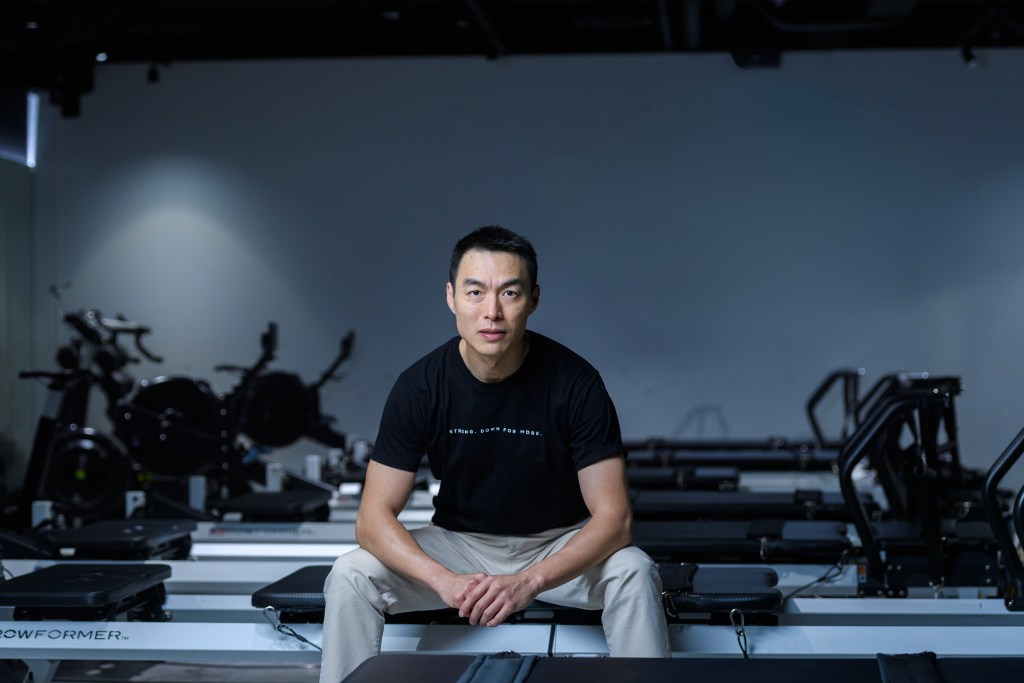
How personal trainer, biohacker, and ex-commando Chua Jing Zhi set up senior-focused gym ALLSET to help older adults age better
If you’ve recently found yourself reminding your parents or elderly relatives to exercise more – or even get started exercising – you’re not alone.
It could be that Mum has started complaining about aching knees. Or maybe Dad takes a little longer to get up from the sofa these days. Perhaps a seemingly harmless stumble has suddenly become a source of concern for the entire family.
As Singapore officially becomes a super-aged society in 2026, with more than one in five residents aged 65 and above, conversations about healthy ageing are moving from policy papers and healthcare conferences into living rooms across the island.
The good news? More older Singaporeans are taking action.
Senior-focused gyms and strength training programmes such as ActiveSG, Active Ageing Centres (AACs), NTUC Health, Gym Tonic and Thrive Healthcare are seeing strong demand as awareness grows around the importance of maintaining muscle strength and mobility later in life.
According to recent media reports, the demand is so strong that waiting lists at some specialised facilities can stretch for up to nine months.
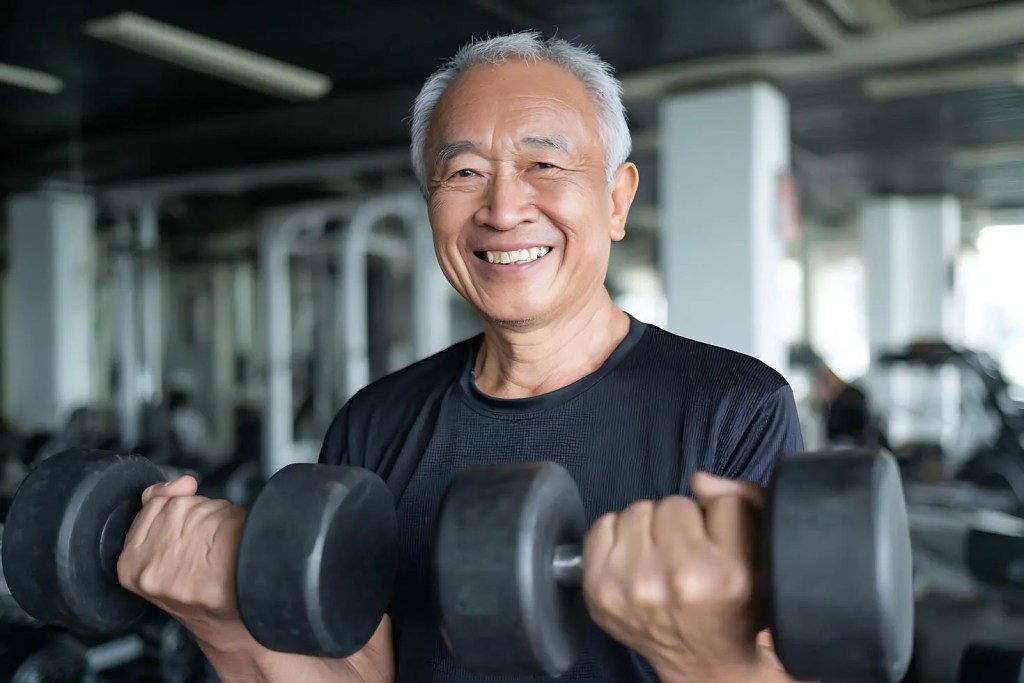
To address the crunch, public agencies and operators are rapidly expanding capacity. Sport Singapore is retrofitting all 28 ActiveSG gyms to be more senior-friendly, while the Combat Age-related Loss of Muscle (CALM) programme is being rolled out across approximately 180 AACs islandwide.
Yet even as these initiatives scale up, a growing number of seniors are looking for something beyond traditional exercise classes.
Enter ALLSET. Founded in 2020 by personal trainer and biohacker Chua Jing Zhi, the company occupies an unusual space between fitness, preventive health and longevity.
Unlike traditional gyms, which typically focus on weight loss or muscle gain, ALLSET’s mission is far simpler (and arguably far more important): Helping people remain healthy, independent and capable for as long as possible.
READ: Bobby Saputra: The billionaire “professional son” who doesn’t want to live forever
ALLSET’s journey began long before its official launch. Prior to founding the company, Chua ran a swim-bike-run coaching business that he started in 2015.
“That was my first foray into coaching,” he says. “In that sense, ALLSET was built upon more than a decade of work in the exercise space. The vision back then [in 2020] was to help everyone in the world eat, sleep, and exercise for their health.”
Like many entrepreneurs, however, Chua’s path was anything but straightforward. His first business eventually folded during the COVID-19 pandemic despite significant personal investment, including a bank loan and funding support secured during that period.
But rather than abandoning the mission, he doubled down. ALLSET emerged from the experience and has steadily evolved into the business it is today.
The company now operates from two locations: A shared space with Core Collective in Katong and a second outlet at The Initial Sama in Tanglin, a wellness-focused serviced residence located opposite the Singapore Botanic Gardens.
Opened in January 2026, the Tanglin facility reflects the direction Chua believes healthy ageing is heading – one that combines exercise, recovery, diagnostics and personalised care under a single roof.

READ: Women are living longer than ever – but why are so many ageing in poorer health?
Many Singaporeans still associate strength training with gym bros, bodybuilders and protein shakes, but healthcare professionals increasingly see things differently.
As we age, our bodies naturally lose muscle mass and strength through a condition known as sarcopenia. While the term may sound intimidating, the effects are surprisingly familiar.
Reduced muscle strength can make everyday tasks such as carrying groceries, climbing stairs or getting out of a chair increasingly difficult. Over time, this can increase the risk of falls and fractures while gradually chipping away at a person’s independence and confidence.
Conditions such as osteoporosis often compound the problem. “Some of these conditions are hard to reverse, especially as you age,” says Chua. “The importance of starting the right exercises early cannot be stated enough.”
This is one reason why Singapore’s Physical Activity Guidelines recommend that adults aged 50 and above engage in muscle-strengthening activities at least twice a week.
Unlike their younger counterparts, strength training for seniors is not about aesthetics. It’s about preserving the ability to carry shopping bags, climb stairs, play with grandchildren, travel, and continue living life on their own terms. In short, it’s about maintaining quality of life.

READ: Longevity centres and clinics in Singapore. Which one is right for you?
At first glance, ALLSET may look like another premium personal training studio. Look closer, however, and a different picture emerges.
More than 90 per cent of the company’s clients are aged above 50. Its oldest client is 80. And unlike conventional senior gyms, ALLSET places a heavy emphasis on measurement. Lots of measurement.
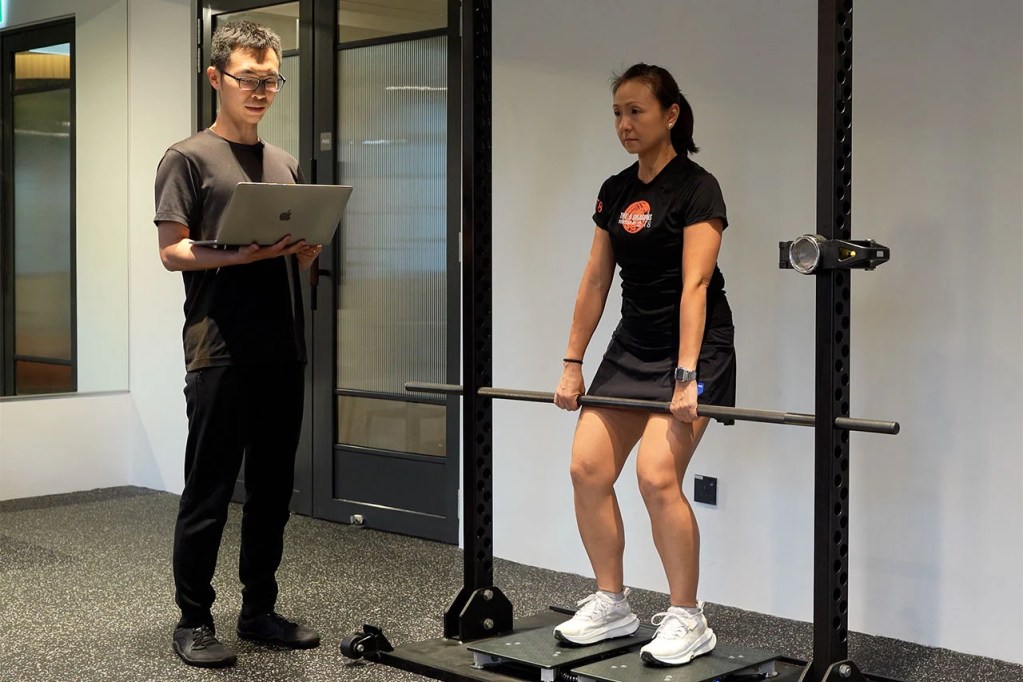
The company has effectively built one of Singapore’s largest datasets of strength measurements among older adults. Clients undergo assessments using specialised equipment from VALD Performance that measure strength, balance, force production and movement quality.
Think less “lift heavier weights” and more “understand exactly how your body is ageing”.
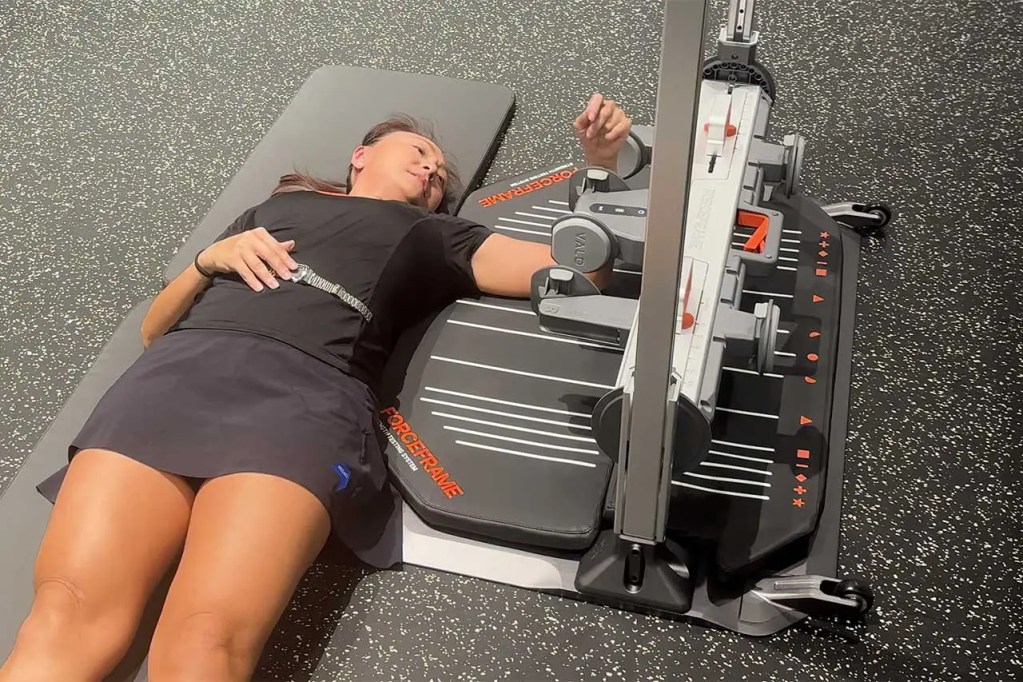
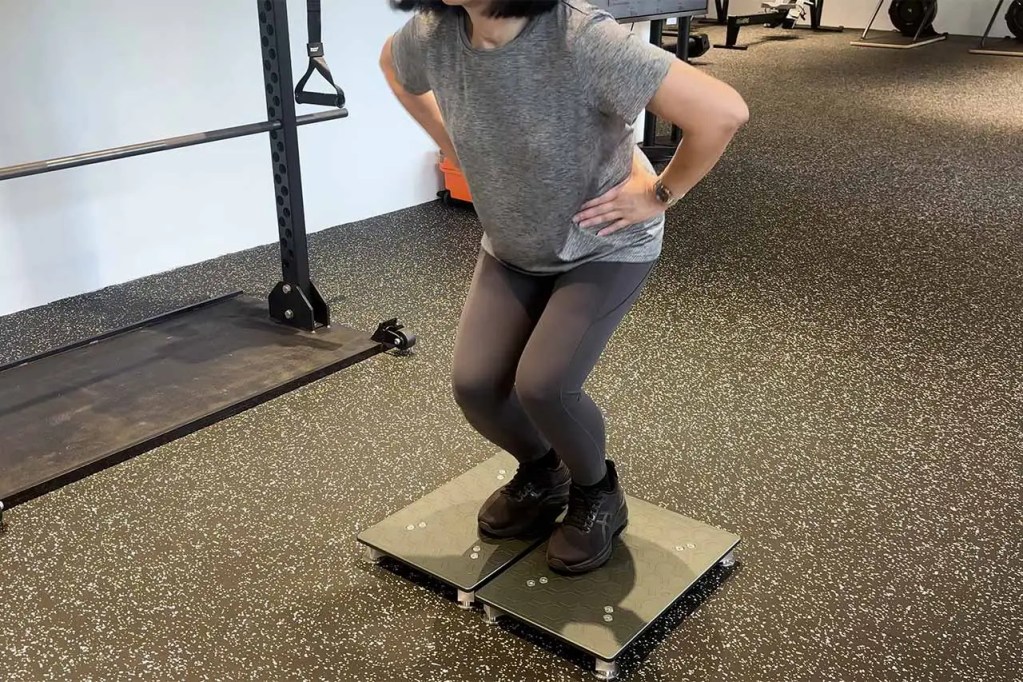
If traditional senior gyms are the equivalent of a family sedan, ALLSET is attempting to be the Tesla of healthy ageing – loaded with sensors, diagnostics and performance data designed to help older adults train smarter rather than simply harder.
The facility uses sports science tools typically associated with elite athletes, including force plates, isometric testing rigs and advanced performance monitoring systems.
The goal is not to turn retirees into marathon runners. Rather, it is to identify weaknesses early, monitor changes over time and prescribe exercises that produce measurable improvements.
Chua also measures metrics such as VLaMax, the anaerobic counterpart to VO₂ Max; FatMax and Maximal Fat Oxidation (MFO); and CarbMax, “Because [they are] more actionable than just VO₂ Max,” he says.

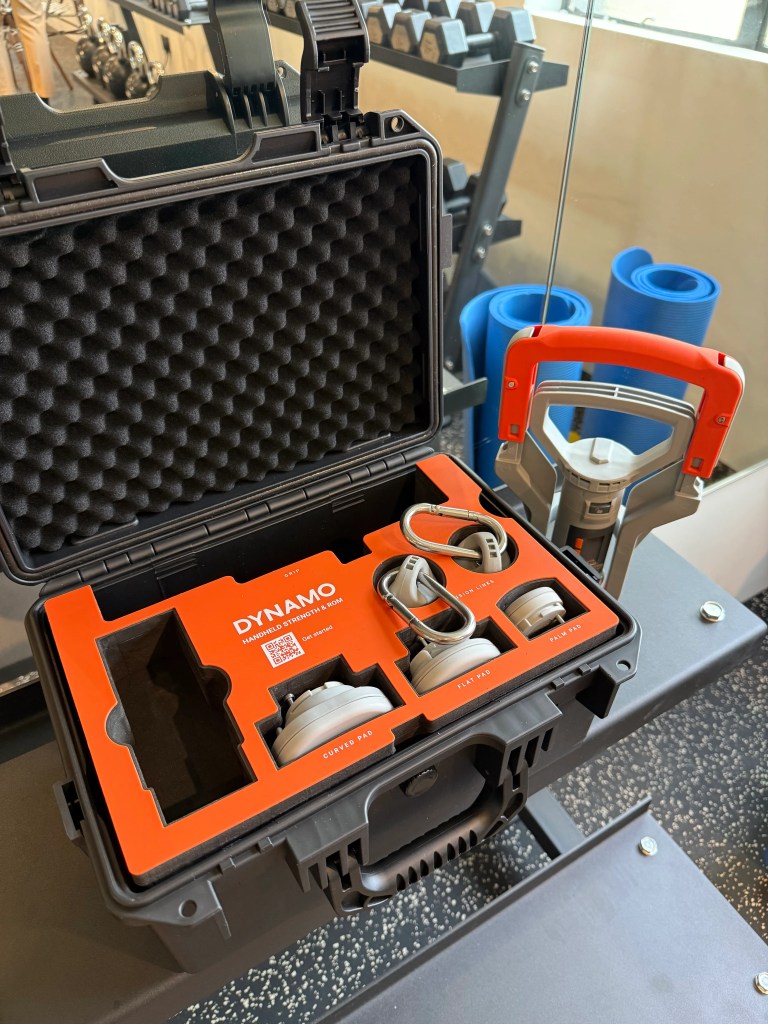
Instead of merely telling clients whether their cardiovascular fitness is good or bad, these assessments can help determine how efficiently the body uses energy, burns fat and responds to exercise.
For older adults, that information can be surprisingly valuable. It helps ensure they are exercising at the right intensity, avoiding unnecessary fatigue and targeting the outcomes that matter most for long-term health.
In other words, exercising smarter, not longer.
That level of precision is increasingly attracting attention from preventive health and longevity clinics. According to Chua, clinics focused on healthy ageing and longevity, such as TSquared and NutraNourish, frequently refer clients to ALLSET for physiological testing and exercise guidance.
READ: What happens when you go for a longevity screening at MORROW?
Part of what makes ALLSET different can be traced back to its founder. Unlike many personal trainers, Chua openly identifies as a biohacker – someone who uses data, technology and self-experimentation to optimise their health and performance.
His journey began with a wake-up call. “I thought I was healthy until I found my blood pressure was elevated during a demo shoot,” he recalls. “That moment pushed me to take control of my biology.”
The experience sparked an obsession with understanding how the body works. Today, Chua tracks his own health using a dizzying array of tools and metrics. He owns a VO₂ Max testing device worth approximately S$8,000, experiments with wearable blood pressure monitors, and regularly analyses physiological data to fine-tune his training.
He’s also a member of Don’t Die SG, a private WhatsApp community where doctors, entrepreneurs and health enthusiasts exchange notes on everything from sleep optimisation and glucose monitoring to supplements and longevity research.
Chua believes many of the principles behind biohacking can be applied to ordinary people – particularly older adults. And increasingly, data can help, although the challenge remains making that data meaningful.
Most people don’t particularly care about obscure physiological markers. What they care about is whether they’ll have enough energy to keep up with their grandchildren, continue living independently, or enjoy a holiday.
The numbers are merely tools to help achieve those outcomes. As Chua puts it, “Exercise is sometimes considered the most powerful drug due to its holistic health benefits.”
Of course, there is one question many readers will inevitably ask. How much does all this cost?
ALLSET’s personal training sessions start from S$249 per hour and can reach as high as S$698 per hour depending on the individual, placing them firmly at the premium end of Singapore’s fitness market.
That’s a figure that would likely cause many Singaporeans to do a double take. After all, a standard gym membership costs a fraction of that amount – not to mention that seniors over 65 get free access to all ActiveSG gyms.
Chua understands the scepticism. “It might sound ridiculously expensive,” he says. “But if you read the fine print, it is the exact opposite.”
His argument is that most people evaluate personal training the wrong way. Rather than focusing on the hourly rate, he believes they should focus on the long-term outcome.
The goal, he says, is not to create lifelong dependence on a trainer. Quite the opposite, in fact. His clients learn how to exercise independently, interpret their health data and build sustainable routines that can continue long after formal coaching sessions end.

“You learn how to sustain an exercise routine for the rest of your life, backed by data. And you can save on gym memberships because you will learn how to work out from anywhere. Many of [our clients], even those with average incomes, stick with us because it offers the best return on investment.”
Viewed through that lens, the proposition begins to look less like personal training and more like education. Whether that justifies the premium ultimately depends on the individual. For some, community-based programmes may offer everything they need.
For others – particularly those recovering from health setbacks, managing chronic conditions or seeking highly personalised guidance – the additional support may be worthwhile.
And for many adult children, the calculation is often emotional as much as financial. What value would you place on helping a parent or elderly relative remain mobile, confident and independent for longer?
There is no universal answer. But it is a question more Singaporean families are beginning to ask.
Despite the sophisticated technology and premium positioning, Chua is quick to acknowledge that private providers like ALLSET are only one piece of a much larger puzzle.
The government’s healthy ageing initiatives remain the primary driver of change. “The government is definitely doing most of the heavy lifting. However, my goal is for the company to outdo the government’s impact in the space. I am not sure if it is possible, but I believe it is a goal worth aiming for.”
Chua sees his work as both complementing and extending the government’s efforts to encourage older Singaporeans to take a more proactive approach towards managing their health.
At the same time, growing demand suggests there is room for different models to coexist.
Some seniors may be perfectly served by ActiveSG programmes, Active Ageing Centres or community-based initiatives. Others may eventually seek more specialised guidance, particularly if they have specific health goals or require more individualised attention.
One thing is certain: As awareness around healthy ageing continues to grow, Singapore’s exercise landscape is likely to become increasingly diverse.
Operators like NTUC Health recorded a 60 per cent increase in senior gym-goers between 2024 and 2025. Waiting lists at some facilities continue to grow. New programmes are being rolled out across the island.
Singaporeans are beginning to understand that ageing well is not something that happens by accident. It requires effort, consistency and, increasingly, access to the right support.
For Chua, that support starts with a simple belief. That exercise should not be viewed as a punishment, a chore or a last resort after health problems emerge. Instead, it should be treated as one of the most powerful investments a person can make.
READ: Chained to your desk? Office Syndrome could be shaving years off your life