Popular Searches:
Recommended Posts


Search Results



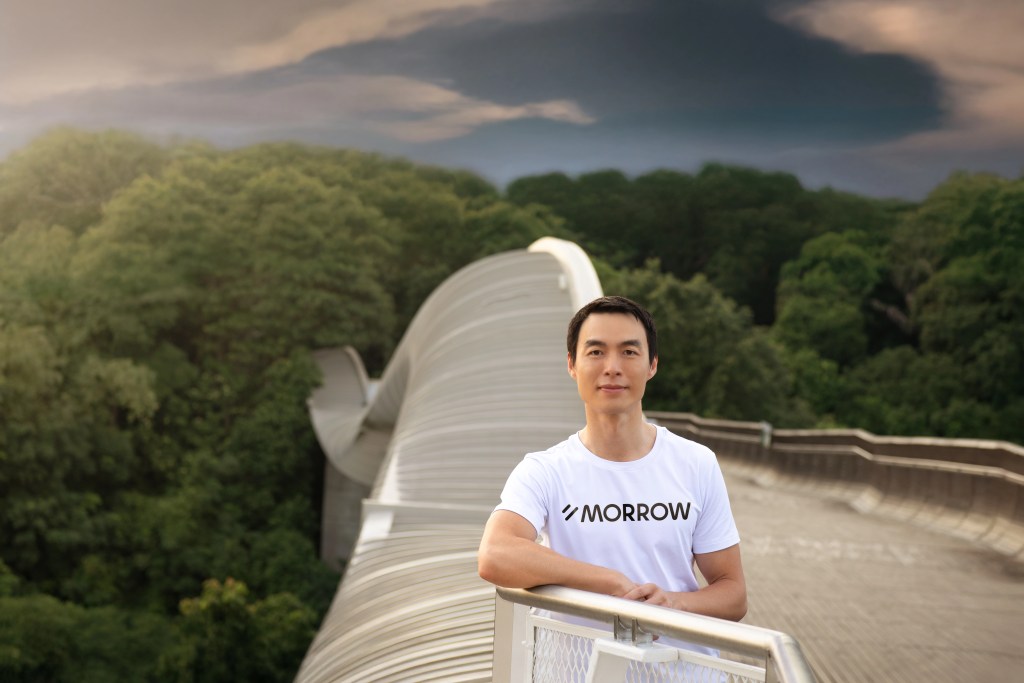
The hospitality entrepreneur spent his early career chasing growth. Now, he wants to make preventive health accessible to “50 per cent” of the population – and believes that insurance companies could have a role to play
For much of his early career, MORROW’s founder and CEO Allen Law, 46, was very good at one thing: Achieving growth. After joining his family’s Park Hotel business, Law helped move its headquarters from Hong Kong to Singapore in 2005 and spearheaded an aggressive regional expansion.
By 2012, the group had grown from one hotel to eight in eight years, with properties across Singapore, China and Japan, and ambitions to reach about 20 hotels.
One of the most audacious moves came in Singapore, where Park Hotel bought the former Crown Prince Hotel on Orchard Road for about S$300 million, subsequently pouring another S$80 million into its transformation into Grand Park Orchard. The Group terminated its management of the hotel in 2021 for strategic and commercial reasons.
It was the sort of high-stakes, high-energy business life that rewards being relentlessly switched on. There was just one problem: Law’s own health was being overlooked.
“For the first 10 years of my career, I lived a workaholic life as founder and CEO,” he says. “I neglected my health – I ate poorly, lived on junk and fast food, and did zero exercise.”
Then, when he was about 25 or 26, something happened that made the cost of that lifestyle impossible to ignore.
“One of the worst moments was when I blacked out and dropped to the floor. When I came to, I had a broken leg.” Fortunately, he was at home getting ready for work when it happened. But the episode stayed with him.
So did his family history. His grandfather and father were heavy smokers, and both developed smoking-related chronic diseases. Law says he never took up smoking himself, partly because he had seen its consequences up close. And he also loathed the smell of cigarette smoke.
Alcohol was another story. During his years studying in the UK, he says, “beer was cheaper than water”. He eventually stopped drinking altogether six years ago.
Today, when people ask what he would tell his younger self, his answer is blunt: “Don’t put your health in the back seat.”
It is also what he tells his two sons. “Health is number one. Without it, you can’t achieve anything or protect your loved ones. Whatever your life purpose or passion is, it must come with health.”
That belief is now at the heart of what Law is building with MORROW and its forthcoming Longevity World complex in City Hall, a roughly S$200 million investment in an integrated longevity destination that brings together preventive health, movement, recovery, nutrition and technology under one roof.


READ MORE: What happens when you go for a longevity screening at MORROW?
Law is careful not to describe his transition from business growth to health and longevity as a single epiphany.
“When I said I was shifting from profit to purpose, it wasn’t one moment. It was a series of life events – multiple signals pushing me in this direction.”
Some of those signals came from friends and family experiencing chronic illnesses and health problems at ages he found difficult to understand. There were cases of infertility and miscarriages, alongside diseases that seemed at odds with the age and apparent health of the people affected.
With a mix of curiosity and concern, he began delving into possible causes. “I began researching what happened to my loved ones, diving into medical studies to understand why and what to do next.”
The more he learned, the more he started connecting the dots between everyday behaviour and long-term health. He began changing his own lifestyle, while speaking to doctors, professors and researchers around the world.
“I finally had real science, real data, and researchers telling me what’s good and bad for health, healthspan, and longevity.” That eventually led him to lifestyle medicine – the practice of using lifestyle itself as an intervention to help people live longer, healthier lives.
Law also began reaching out to people he did not know through LinkedIn, sharing his ideas and asking for advice. Those conversations eventually informed the models, protocols and processes he is now trying to put into practice through MORROW.
But his ambition extends beyond creating a longevity destination.
Law believes that Asia is particularly well placed to become a leader in longevity, partly because of its rapidly ageing population. But he also sees a problem with how the emerging longevity industry is currently structured.
Much of it is expensive. And that matters because the people who stand to benefit from preventive health are not necessarily the people who can spend tens of thousands of dollars on diagnostics, treatments and memberships.

READ MORE: Should you get a longevity screening?
“Health is number one. Without it, you can’t achieve anything or protect your loved ones. Whatever your life purpose or passion is, it must come with health.” – Allen Law
One of Law’s more striking ambitions is therefore also one of his simplest: Make preventive health accessible to 50 per cent of the population, a goal explicitly stated in a Manifesto released in May 2026.
“Most longevity clinics target the top one to five per cent [of the population]. Look at their pricing – it’s expensive. We want to challenge that: Why one to five per cent? Can we do 50 per cent?”
It’s an altogether very different proposition from positioning longevity as the latest luxury lifestyle upgrade.
Before designing MORROW’s protocols, Law says the team conducted market surveys and focus groups, using Singapore’s median household income as its benchmark. The idea is to establish a core offering that is affordable and achievable, while allowing people to pay for additional services if they want more doctor time, facility access or allied-health support.
The reality, at least for MORROW’s current membership tiers, is more nuanced.
Its three-month plans currently work out to about S$733 a month for Empower, S$1,166 for Optimise and S$2,966 for Elevate, before GST. The proposition, then, is not that longevity has suddenly become cheap, but that people can choose their level of engagement rather than having to buy into the full suite from the outset.
Technology, he believes, can help make the economics work.
For MORROW, AI has two roles. One is personalisation: Tailoring recommendations around everything from food preferences and exercise to working patterns, weekends and family commitments.
The second is less sexy but arguably more important. “Doctors and professionals – they’re expensive,” says Law. “Increasing their productivity is the only way to bring costs down.”
MORROW is therefore using AI internally to reduce time costs and improve operational efficiency, with the aim of keeping its services more affordable.
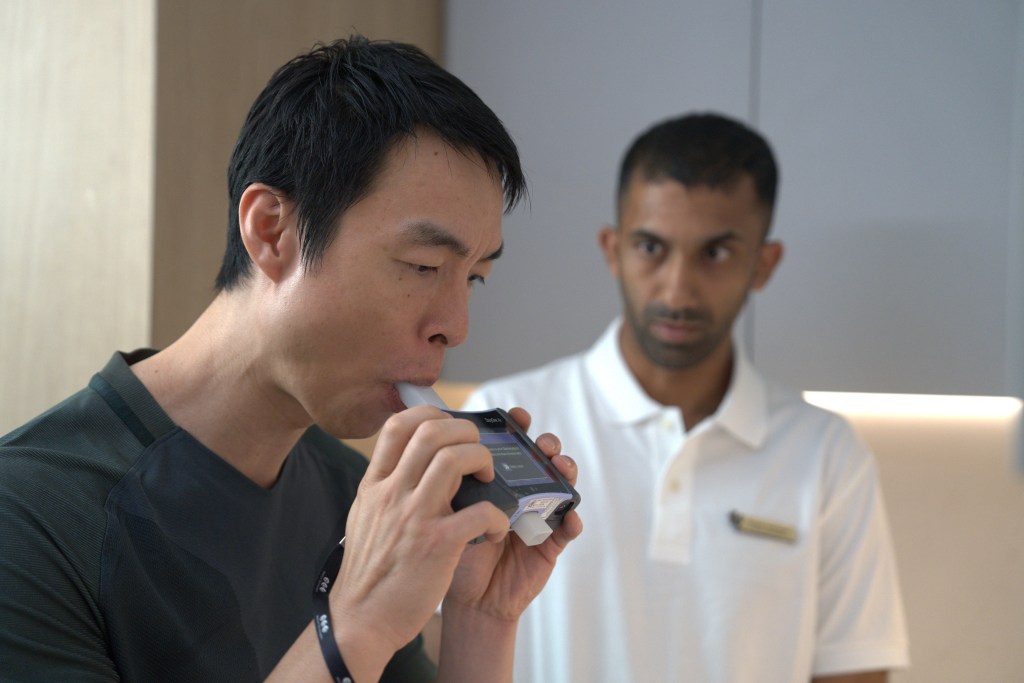
Its first step is MORROW Insights, a longevity-focused health screening priced at S$599. Law sees it less as an endpoint than as a starting line: A snapshot of where a person stands today, from which a plan can be developed.
“If you just come for an exercise, yoga, or pilates class, I can’t do much. I can’t track your improvement or adjust along the way.”
The idea is to establish a baseline, work with a person for three months, then measure again. “The data shows what’s working and what’s not. That’s the powerful moment when individuals decide if this lifestyle is beneficial and sustainable.”

READ MORE: So you’ve done a longevity screening. Here’s what happens next
This emphasis on data also points towards what could become one of MORROW’s most consequential experiments.
Law believes preventive health will eventually have to involve insurers.
“Conceptually, insurers worry about payout events – that’s how risk is calculated,” he says. “But everyone wants to stay healthier for longer. If we achieve that, insurers pay out less, and individuals live healthier, longer lives. Two wins.”
The problem, he says, is evidence. Insurers need longitudinal data showing that a structured intervention can actually change measurable health outcomes and, ultimately, reduce the risk of costly diseases such as heart disease and stroke.
“The current difficulty is the lack of data. No one has gone through a proper, tracked programme with supporting data. That’s exactly what we’re trying to do at Morrow.”
There are, he says, “interesting developments” underway with an insurance partner, although details cannot yet be disclosed. The plan is to recruit a cohort and establish their starting-point data this year, before measuring the results over time.
If it works, the implications could extend well beyond MORROW.
For years, preventive health has largely been something individuals have had to opt into – and pay for – themselves. Law is betting on a different model, one in which better health can eventually become measurable enough to change how healthcare, insurance and even risk are priced.
It is an ambitious bet, and one that has not yet been proven. But that’s what makes MORROW’s trajectory interesting.
After spending much of his career figuring out how to grow a business, Law is now trying to solve a rather different growth problem: How to help people add more healthy years to their lives without making longevity another luxury reserved for the few.
His own lesson came early. The next question is whether he can build a system that helps a lot more people take that lesson seriously – before they have their own black-out moment.
READ MORE: Longevity centres and clinics in Singapore. Which one is right for you?