Popular Searches:
Recommended Posts


Search Results


The move positions Singapore at the forefront of healthy longevity globally, while creating new pathways for healthcare professionals and mid-career upskillers.
As populations around the world live longer than ever before, the conversation is shifting from simply extending lifespan to improving healthspan, or the number of years people spend living in good health.
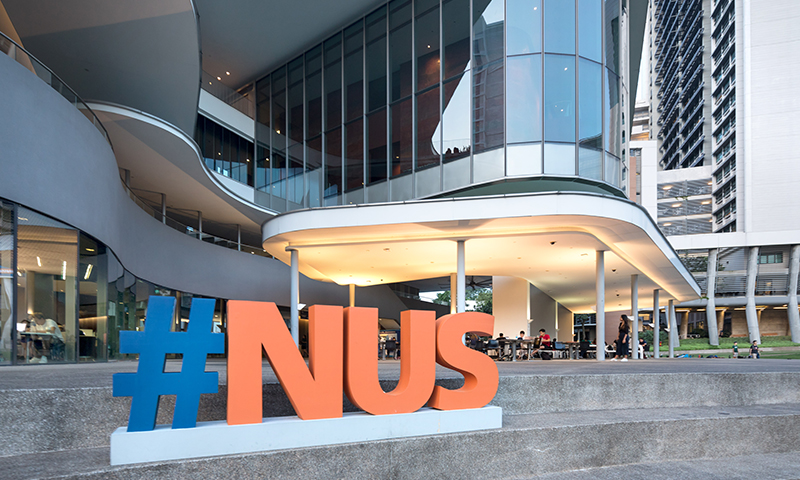
Now, the National University of Singapore (NUS) is positioning itself at the forefront of that movement.
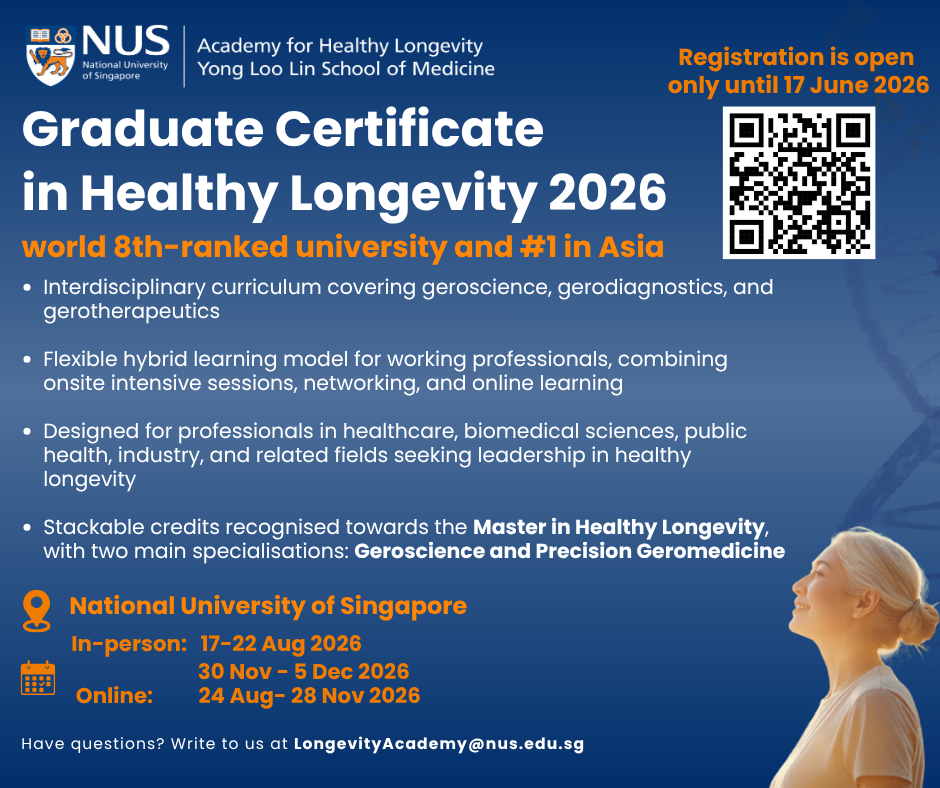
The University has announced what it describes as the world’s first postgraduate programme in geroscience and precision geromedicine: A new Graduate Certificate in Healthy Longevity that will commence in August 2026 (programme details below). This will serve as the foundation for a future Master in Healthy Longevity programme slated for launch in 2027.
Offered through the NUS Academy for Healthy Longevity and NUS Yong Loo Lin School of Medicine, the semester-long hybrid programme aims to equip professionals with the knowledge and tools needed to navigate one of the fastest-growing fields in healthcare and biomedical science.
More than just a new academic offering, NUS views the programme as an effort to build the talent pipeline for an emerging discipline that sits at the intersection of biology, medicine, technology, entrepreneurship and public policy.
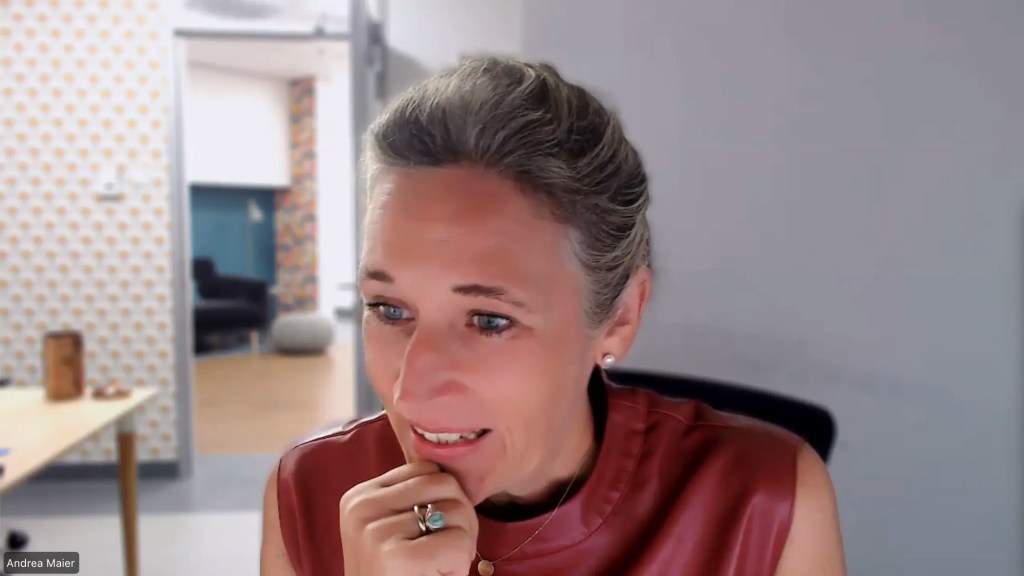
“We really want to achieve building the next generation of leadership within healthy longevity,” said Professor Andrea Maier, Director of the NUS Academy for Healthy Longevity. “What we really want to achieve is to have that link between geroscience and geromedicine.”
Maier hosted a Zoom webinar on 5 June to address queries from prospective applicants around the world.
The launch is significant not only for NUS, currently ranked eighth globally and first in Asia, among the world’s leading universities, but also for Singapore’s broader ambitions in the burgeoning healthy longevity sector.
Training professionals for a new era of healthcare
The programme arrives at a time when healthcare systems globally are grappling with ageing populations and rising chronic disease burdens.
According to Maier, traditional medical education remains largely focused on diagnosing and treating disease after it occurs. By contrast, geroscience seeks to understand the biological mechanisms of ageing itself, with the aim of intervening earlier and extending healthy years of life.
“We need the next generation of healthcare professionals,” Maier explained. “Healthcare professionals are not trained in really measuring biological age and intervening early. We are hugely trained on processes to diagnose and treat diseases. We should intervene much, much earlier, and maybe also think about measuring much, much earlier.”
The programme is targeted at clinicians, scientists, allied health professionals, policymakers, entrepreneurs and industry leaders. Maier and her team have deliberately designed it as a multidisciplinary course, bringing together participants from different backgrounds to help shape a rapidly evolving field.
“We have deliberately chosen to bring healthcare professionals together with entrepreneurs and scientists because this is a new field, and we have to learn from each other,” she said.
Maier also emphasised the programme’s translational focus, with lessons designed to move beyond theory and into real-world application.
“Is it translatable into clinical practice? Absolutely, that’s the goal of it,” she said. “We are making sure that healthcare professionals, scientists, regulators and entrepreneurs all get something meaningful out of it together to actually build the field.”
Supporting Singapore’s longevity ambitions
The launch also reinforces Singapore’s ambitions to become a leading hub for healthy longevity research, innovation and clinical translation.
Maier noted that longevity remains a relatively young and loosely regulated field globally, creating opportunities for policymakers and regulators to help shape future healthcare frameworks.
“At the moment, the longevity market is not so well regulated,” she said. “We are really focusing on policymakers who should help build the framework to shift the healthcare system from reactive to very proactive.”
The university believes the programme can contribute to the broader longevity ecosystem by developing specialised talent, fostering collaboration and creating stronger connections between academia, healthcare and industry.
“As you might know, in geromedicine and geroscience, there are not so many educational tracks yet,” Maier added. “That’s also the reason why we are so proud – we are really forming the infrastructure for it.”
READ: Longevity centres and clinics in Singapore. Which one is right for you?
Pathway to a future master’s degree at NUS
The Graduate Certificate consists of 12 modular credits and will form part of a future 40-credit Master in Healthy Longevity.
“This course is deliberately designed as a part-time programme,” said Maier. “We bring physicians, allied health professionals, biologists, engineers and whoever wants to join together because this is the basis for healthy longevity.”
The future master’s programme is expected to offer more specialised tracks, including geromedicine, geroscience, entrepreneurship and regulatory pathways.
While the deadline for SkillsFuture funding applications for the current intake has already passed, eligible Singaporeans may be able to use their SkillsFuture Credits to offset qualifying tuition fees for the Master’s programme.
Programme details
Graduate Certificate in Healthy Longevity (registration closes 17 June 2026)
Cost: S$19,650 (excluding GST)
Duration: One semester
Format: Hybrid
Onsite intensive (Part 1):
17 – 22 August 2026
Online learning:
24 August – 28 November 2026
Onsite intensive (Part 2):
30 November – 5 December 2026
Curriculum
Foundations of Healthy Longevity
Gerodiagnostics and Biomarkers of Ageing
Gerointerventions
Lecturers
READ: Chained to your desk? Office Syndrome could be shaving years off your life