Popular Searches:
Recommended Posts



Search Results

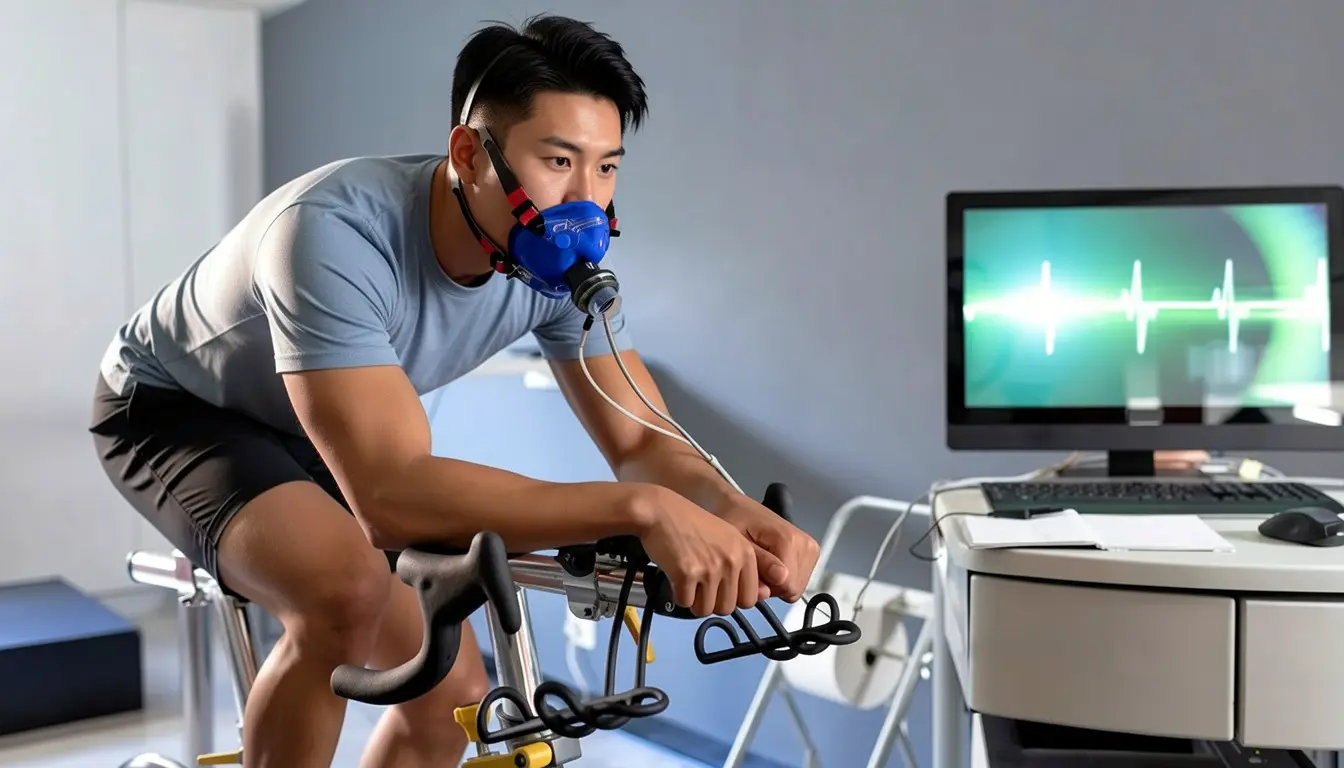

Annual health screenings are designed to detect disease. Longevity screenings go a step further, looking for the early signs of ageing and decline long before symptoms appear. Here's how they differ, who they're for, and whether they're worth the investment
When it comes to health screenings, most people fall into one of two camps.
The first treats them like a necessary evil. Every year, they dutifully turn up for their company-sponsored health screening, roll up a sleeve for a blood test, answer a few questions, then breathe a sigh of relief when the results come back normal. Job done. See you again next year.
Then there’s the other camp. People who don’t just want to know whether they’re healthy today – that’s so basic. They want to know how healthy they’ll be in their 70s, 80s and 90s.
So besides checking for the usual suspects like diabetes, high cholesterol, hypertension and various cancers, they’re also measuring things like muscle mass, bone density, cardiorespiratory fitness, insulin resistance and chronic inflammation.
Their goal isn’t simply to spot a disease. It’s to understand whether their body is ageing as well as it could be, and, if not, what they can do about it.
This is a growing area known interchangeably as lifestyle medicine, longevity medicine, or preventive medicine. You can check out our longevity FAQ here to find out what the differences are.
With the rise of longevity medicine has come a wave of longevity-focused screenings. Once largely associated with Silicon Valley biohackers and hardcore wellness enthusiasts, they’re now becoming increasingly accessible in Singapore through specialist longevity clinics and, more recently, even mainstream private healthcare providers.
At first glance, though, they can seem remarkably similar to a conventional health screening. Both involve blood tests. Both assess your health. Both end with a report and, hopefully, a clean bill of health.
So what’s the difference?

“The analogy I find useful is financial,” says Dr. Ari Ali Sahebkashaf, Medical Director at MORROW. “A conventional health screen is like checking your bank balance and confirming it is not negative. A longevity screen is like examining your income, your spending patterns, your savings rate and your projected balance over the next decade. One tells you if you are in trouble today. The other tells you if you are heading for trouble and gives you time to change course.”
With longevity screenings gaining traction in Singapore – Raffles Medical Group recently launched their HealthyLongevity programme, while HMI Medical unveiled screening packages that are focusing on supporting longevity – we turned to four doctors for answers.
Here, they explain how they differ from conventional health screenings, who they’re really for, and whether they’re worth considering if you already get an annual check-up.
READ: Common questions about longevity
At its core, a conventional health screening is designed to answer a relatively straightforward question: Are you sick today? It looks for existing diseases or conditions such as diabetes, hypertension, high cholesterol and certain cancers, all of which are covered under evidence-based screening guidelines from Singapore’s Ministry of Health.
A longevity screening, on the other hand, asks a different question altogether: What are your risks of developing disease in the future, and what can you do about them now?
“The simplest way I can explain it is this: Conventional medicine is built around one central question. Are you sick right now?” says Dr. Sahebkashaf. “Longevity screening starts from a different place entirely. Given your biomarkers, body composition, cardiovascular fitness, metabolic profile and family history, where is your health heading in 10, 20 or 30 years?”
Rather than replacing a conventional screening, doctors – such as Dr. Justin Lim, Family Physician and Medical Director of The Downstairs Clinic – stress that longevity assessments are best viewed as an additional layer of personalised evaluation.
Depending on the individual, “This may include more detailed cardiovascular risk assessment, body composition analysis, metabolic health markers, inflammatory markers, sleep assessment, fitness measures, and other indicators of biological health,” he says.
READ: What happens when you go for a longevity screening at MORROW?
One of the key arguments for longevity screening is that many age-related diseases develop silently over years – sometimes decades – before symptoms appear.
Take insulin resistance. According to Dr. Sahebkashaf, a person’s HbA1c, a commonly used measure of blood sugar control, can remain perfectly normal for years even while insulin resistance is quietly worsening in the background.
Similarly, markers such as Apolipoprotein B (ApoB) and Lipoprotein(a), both linked to cardiovascular risk, are not routinely included in many standard health screenings despite providing useful insights into future heart health.
Longevity screenings also place greater emphasis on physical performance and function.
Measures such as VO₂ max – a marker of cardiorespiratory fitness – have emerged as powerful predictors of long-term health outcomes. Low fitness levels have been associated with significantly higher risks of illness and premature mortality, even among people who otherwise appear healthy.
Doctors may also assess factors such as visceral fat, muscle mass and chronic low-grade inflammation. None necessarily indicate disease today, but they can serve as early warning signs that allow for intervention before problems become harder to reverse.
The short answer: Not everyone needs one.
However, doctors say that longevity screening may be particularly useful for people who want a deeper understanding of their future health risks, especially those with strong family histories of cardiovascular disease, diabetes, cancer or other chronic conditions.
It can also benefit individuals whose health goals extend beyond simply avoiding disease. Many people seeking longevity assessments are interested in maintaining physical function, independence and quality of life as they age.
Importantly, longevity screening is not reserved for elite athletes, wellness enthusiasts or biohackers. Increasingly, doctors are seeing otherwise healthy professionals who simply want a more detailed picture of their long-term health trajectory.
While there is no universal age, several doctors pointed to the mid-30s as a reasonable starting point.
By then, lifestyle habits have often become sufficiently established for meaningful patterns to emerge, while there is still ample opportunity to intervene before chronic disease develops.
Age, however, is only one part of the equation. “Family history, lifestyle factors, and existing risk profiles are often equally important in determining when screening should begin,” says Dr. Toh Zheng Jie, Family Physician at HMI Medical Centre (Amara).
And then there is the question of gender. “Women may require additional attention to reproductive health, menopause-related changes, bone density, and cardiovascular risk factors that can shift significantly after menopause,” Dr. Toh explains.
“Men may benefit from monitoring factors related to testosterone levels, cardiovascular health, and metabolic risk earlier in midlife,” he adds.

Perhaps the biggest misconception is that longevity screening is simply about doing more tests.
Doctors caution that more testing does not automatically translate into better outcomes. The goal is not to collect as much data as possible, but to identify information that is both meaningful and actionable.
“Some people also assume longevity screening can predict how long they will live. It cannot,” says Dr. Lim.
Instead, they identify modifiable risk factors that may influence future health outcomes, allowing people to make informed decisions about diet, exercise, sleep and other lifestyle habits.
There is also a tendency to associate longevity medicine with extreme biohacking trends, from ice baths to experimental supplements and peptide therapies. In reality, doctors say that evidence-based longevity medicine remains surprisingly conventional.
The fundamentals still matter most: Cardiovascular fitness, metabolic health, muscle mass, sleep quality and stress management. “The interventions are often unglamorous. That is also what makes them durable,” says Dr. Sahebkashaf, rather candidly.
Absolutely.
The longevity industry has sometimes been criticised for promoting extensive testing with limited clinical value, and doctors acknowledge that overtesting is a genuine concern.
A whole-body MRI is one example frequently cited in the debate. While it can occasionally uncover important findings, it can also detect incidental abnormalities that pose little real health risk but trigger anxiety and additional investigations.
For this reason, doctors emphasise that every test should have a clear purpose.
“The value lies in selecting tests that are likely to provide meaningful and actionable information,” says Dr Lim.
Or, as Dr. Claudine Pang, co-founder of Asia Longevity, puts it, numbers alone are just data. What matters is whether the results lead to practical steps that improve health outcomes.
“The real value of a longevity screening lies not in the volume of tests performed, but in the quality of interpretation and the personalised plan that follows. Testing should inform better living, not become an end in itself,” she says.
READ: Longevity centres and clinics in Singapore. Which one is right for you?
According to Dr. Lim, the higher cost often reflects the breadth and depth of assessment involved.
Unlike conventional health screenings, which focus on a relatively narrow set of established tests, longevity assessments may incorporate advanced biomarkers, body composition analysis, imaging, functional testing and more detailed physician interpretation.
However, doctors caution against assuming that a higher price automatically means a better screening.
“When longevity screening is done well, meaning when testing is personalised to an individual’s actual risk factors rather than applied as a blanket premium package, it does not have to be expensive,” says Dr. Sahebkashaf.
In some cases, a carefully targeted longevity assessment may cost less than comprehensive executive health screening packages.
According to the doctors we spoke to, this is arguably the most important question of all.
Many people assume that feeling healthy means being healthy. While that is often true, subjective wellbeing does not always reflect what is happening beneath the surface.
Doctors say it is not uncommon to uncover elevated cardiovascular risk markers, insulin resistance or poor cardiorespiratory fitness in people who exercise regularly, maintain a healthy weight and feel perfectly well.
That is because longevity screening is less concerned with how you feel today than with where your health may be heading tomorrow.
For some people, the results provide reassurance. For others, they reveal opportunities to improve areas such as nutrition, exercise, sleep or stress management before problems arise.
Either way, the value lies in gaining visibility into risks that might otherwise remain hidden until much later – when the window for prevention may be considerably smaller.

| Health screening | Longevity screening | |
| Primary purpose | Detect existing diseases or medical conditions | Identify future health risks and opportunities for early intervention |
| Key question | Am I sick today? | How well am I likely to age, and what can I do to improve my long-term health? |
| What it typically tests | Diabetes, hypertension, cholesterol, breast cancer, cervical cancer, colon cancer, prostate cancer | May include advanced cardiovascular risk markers, body composition, metabolic health, inflammation, sleep quality, cardiorespiratory fitness (VO₂ max), muscle mass, bone density and other longevity-related biomarkers |
| Approach | Population-based screening following established guidelines | Personalised assessments based on age, family history, lifestyle and individual risk profile |
| Who it’s for | General population | People seeking a deeper understanding of their long-term health, particularly those with specific risk factors or health goals |
| End goal | Diagnose disease or detect it at an early stage | Identify modifiable risk factors before disease develops and recommend interventions |
| Typical outcome | Referral for further investigations or specialist treatment if abnormalities are detected | Personalised action plan covering areas such as nutrition, exercise, sleep, stress management and ongoing monitoring |
| Follow-up | Repeat screening at recommended intervals or specialist review if required | Ongoing coaching and optimisation. Depending on the provider, this may include regular reviews, digital tracking, allied health support or concierge-style programmes. |
| Typical cost | Around S$400 – S$800 | From S$500 onwards, depending on the scope of assessment and level of follow-up provided |