Popular Searches:
Recommended Posts



Search Results
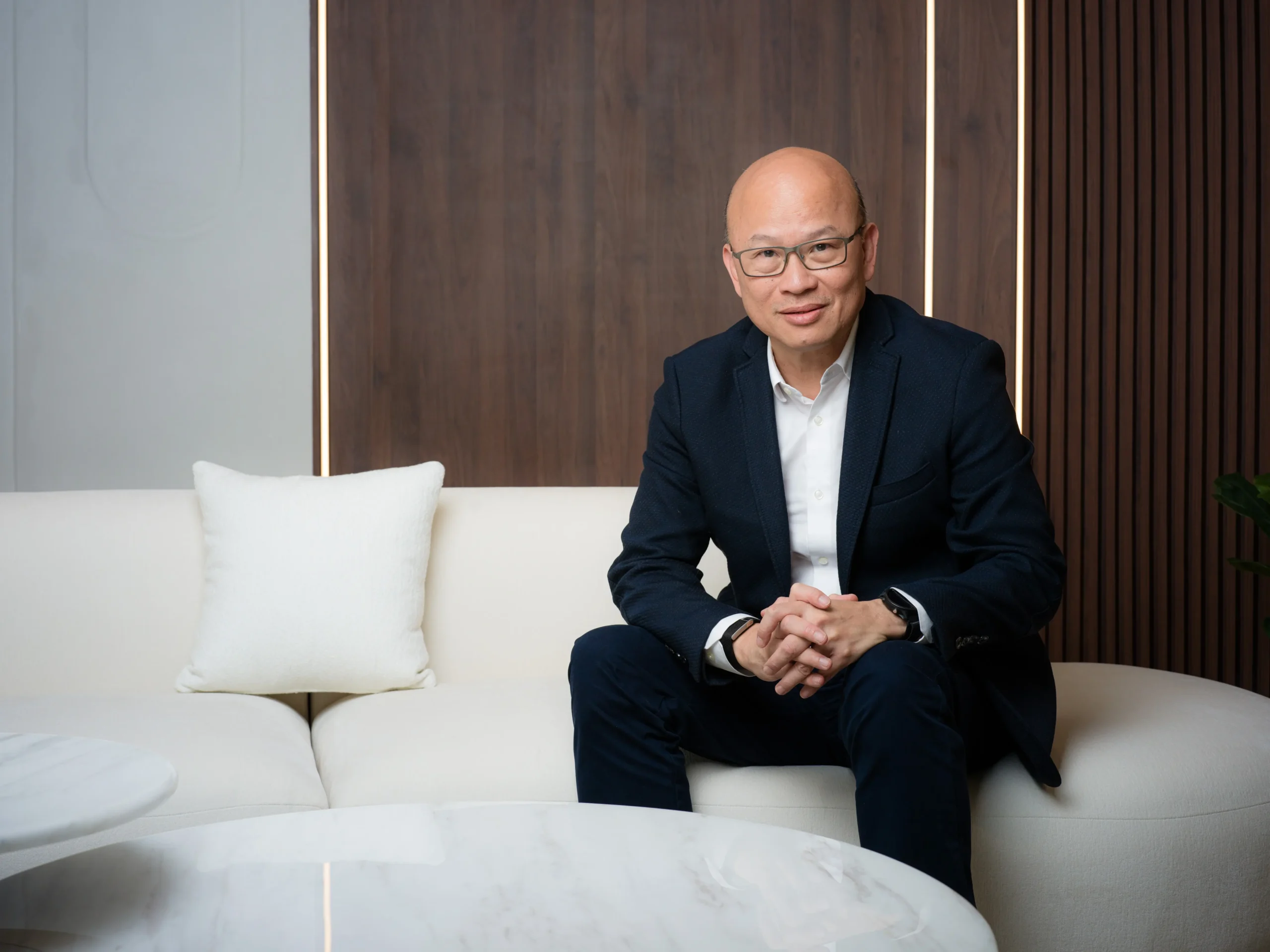

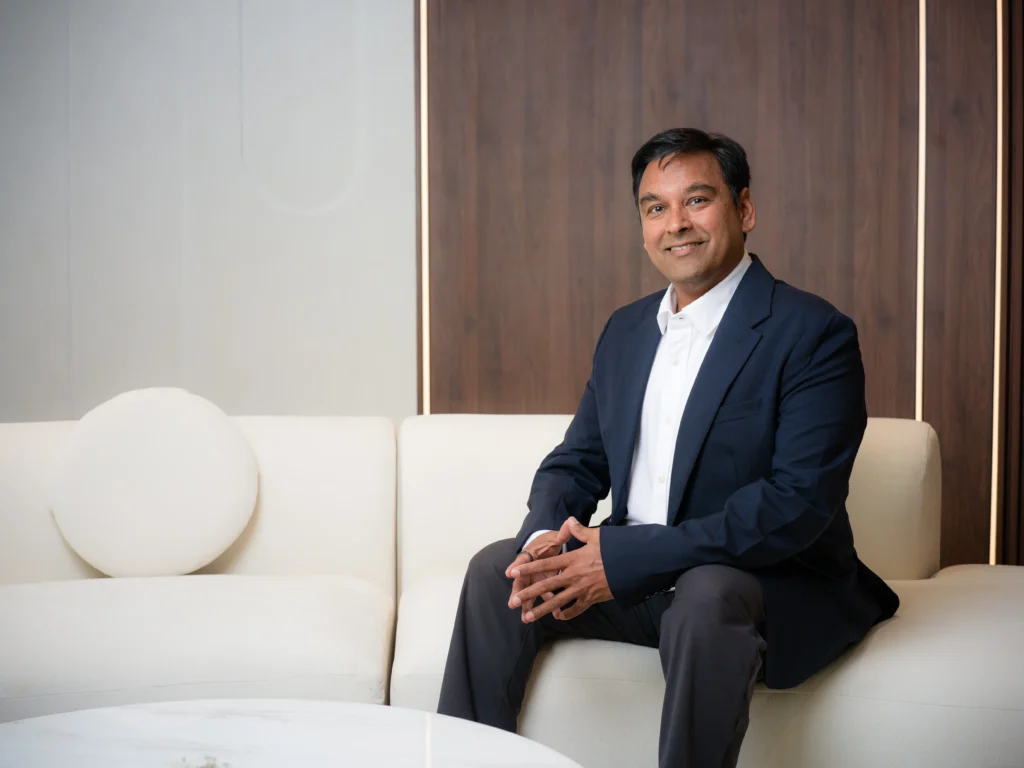
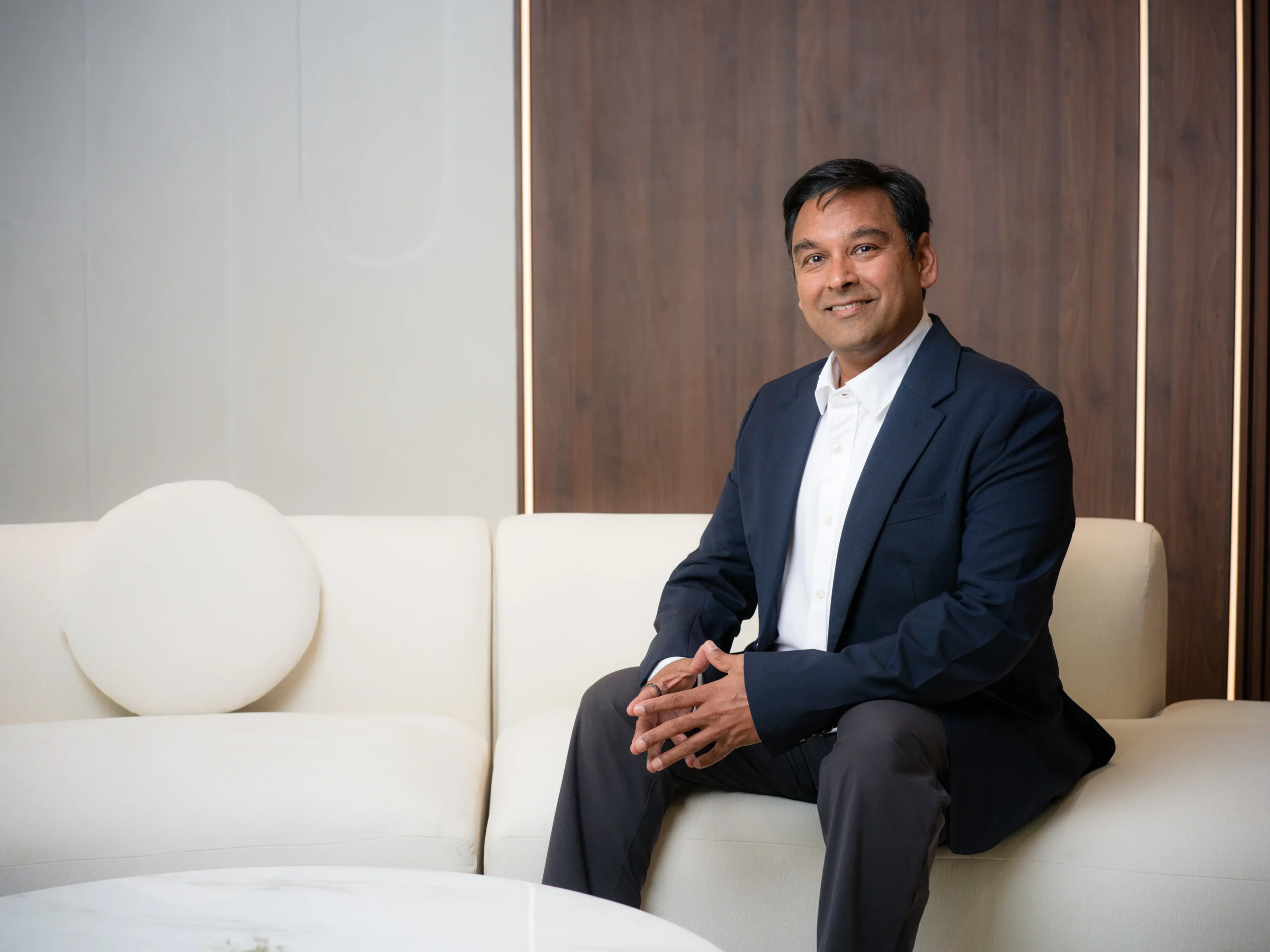
This time, we cast the spotlight on Elyx Chairman Peng T. Ong, who believes we’re asking the wrong questions about health – and is building Elyx to change that
At a time when healthcare still largely kicks in after something goes wrong, Elyx Life is betting on a different premise: That the most important question we can ask isn’t how to fix our health, but how to maximise it.
Operating out of Raffles Arcade, the newly launched, concierge-led platform brings together doctors, performance specialists, and AI into a tightly orchestrated system designed for proactive, long-term optimisation.
For co-founder and Chairman Peng T. Ong, the starting point is deceptively simple: “How do I maximise my health?” It’s a question he believes the modern medical system – which was built to treat illness rather than prevent it – has yet to answer. “If you don’t have health, all the money in the world doesn’t matter,” he says.
Elyx is built around that premise, combining hyper-personalised care with AI-driven analysis to help members stay ahead of disease, rather than react to it.
Here, we speak to Ong about rethinking the purpose of medicine, the role of AI in decoding health, and why the most strategic question in life still lacks a clear answer.
Read: Part 1: In conversation with the co-founders of Elyx, Singapore’s first concierge longevity service
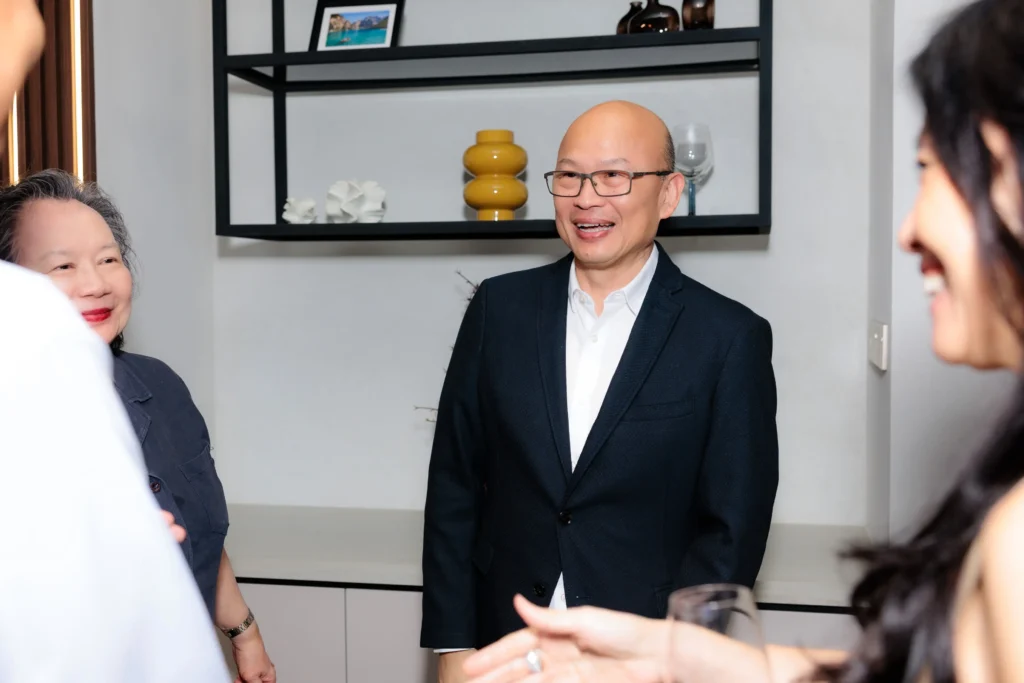
Peng T. Ong (PTO): It came down to a very simple question that everyone needs to ask themselves: “How do I maximise my health?” If you don’t have health, all the money in the world doesn’t matter.
If you’re physically fine, you still want to prevent yourself from getting sick. Who do you talk to? Yes, there are reasonable, generic solutions like eating well, sleeping well, and exercising properly. But what if you have injured yourself? Do you still exercise?
So the solution cannot be a generic solution. We’re all different. We all have different conditions in our bodies that need to be personalised – hyper personalised, in fact.
This isn’t just a Singapore thing or a Southeast Asia thing; it’s a global thing. I’m on the board of Dell Medical School at the University of Texas at Austin. We’re struggling with what the purpose of medicine is. Is it just to repair people after they’ve broken themselves? Or is it to help people flourish?
If you don’t have health, all the money in the world doesn’t matter.
PTO: It’s understandable why the [Western] medical system evolved in the way it did, because when we’re well, we don’t think anything is wrong. We don’t think we’re dying. We’re actually dying slowly, but we don’t think of it that way. It’s only when we’re dying very quickly that we want an instant solution, right?
But if you think more strategically, what if we don’t get into these situations where we die very fast. We impede the rate at which we die. I think that’s the future of how we look at health. We’ve matured as a species, so we understand that these are issues we can think about way beforehand. We don’t have to wait until we get a heart attack to realise, oh, we should have dieted properly.
The world didn’t have a proper resource for you to answer one of the most important questions you could ask. It’s even more important than, “How do I invest for retirement?” Yet we have lots of resources for that.
When we looked at the problem, we concluded that this isn’t just a medical science or health problem; it’s an AI problem. Why? Because the answer to that question will potentially overwhelm a human doctor. Just think of all your biotelemetry, your X-rays, your EMRs, your bloodwork, your epigenetic test results, your genetic test results – if you take everything and give it to a doctor, they will be overwhelmed. And that’s just from one person.
So we put the medical folks and the computer science folks together, and we’re building this company to be able to, at some point, have a systematic way to answer the question, “How do I maximise my health?” – the most strategic question in your life. It’ll take us a while to build this.
We’re actually dying slowly, but we don’t think of it that way. It’s only when we’re dying very quickly that we want an instant solution, right?
PTO: Our members tend to be very thoughtful or intellectual, and self-made. They’re strategic about their thinking. So they reason, “I have all this money, and this healthspan service costs a lot, but you know what? What’s money for, right? Let me trade off some of that money for my health.”
It’s sort of like delegating your investments to financial service providers for them to maximise. The executives tend to be strategic in thinking about where they put their resources. Because if they spend one hour thinking about their health, that’s one hour that they’re not spending doing deals or whatever, and that could be worth hundreds of thousands of dollars.

PTO: High achievers are very focused people, and they typically don’t focus on themselves. They focus on achieving. So they might be sleeping only three hours a day because they’ve got this huge company they’re trying to build, but they’re paying a price. We’ve all been there. Ashish, our CEO and co-founder, has been there. I’ve been there.
You spend two, three years cracking up an incredibly great company, but at some point you realise you need to start looking after your body, because you won’t have it for long if you keep running it to the ground. All of us who build companies understand this.
This is the problem with high performance people. They are so narrowly focused on their work that they don’t focus on their health, and that’s not sustainable.
PTO: There is still this problem of adherence. If you ask any doctor, he’ll tell you that adherence is one of the biggest problems in medicine.
I just heard this from someone in Manila, where I’m taking the call right now. An oncologist prescribes cancer drugs to cancer patients, but the adherence rate is only 66 per cent. So one-third of the patients stopped taking the drugs. It blew my mind.
But that’s how human beings behave. It’s not because they want to stop taking. It’s because they sometimes forget, or they feel better so they don’t take it, or they don’t think it’s important etc.
We’re trying to find a solution to that. We want our members to be closer to a 95 per cent adherence rate rather than 50 per cent, as it will mean a significant difference in their health outcomes.
PTO: First of all, I think we’re already a Blue Zone state, so people are aware that they’re living longer than in most countries. But they’re also realising that their health is not keeping up. Maybe we can’t walk, we can’t see properly, we have some dialysis problem, or some metabolic disease. In general, our healthspan is about 10 years shorter than our lifespan.
Second of all, the regulations here are very, very tight. So if we can survive in Singapore, the rest of the world will be a walk in the park. However, I do worry that we tend to be overly tight on regulations, so it’s very hard to innovate. When you operate at the boundaries of science, you need to push it forward somehow. Can we push it forward here? I’m not sure.
We picked an especially hard regulatory environment to do this simply because we think that makes us stronger.
At some point you realise you need to start looking after your body, because you won’t have it for long if you keep running it to the ground. All of us who build companies understand this.
PTO: We’re focusing on making Elyx a global brand. We’re starting off at a reasonably high end, because, frankly, it takes time, money, energy to address a lot of these things.
Our goal is to automate as much as possible, so that we reduce the cost by an order of magnitude several times over, over the next 10 years. This is so that it becomes accessible to everyone, even in emerging markets.
We want everyone to be able to answer that question of how to maximise their health. At some point in our evolution, we should be able to do that.
PTO: That’s not even our goal, okay?
We will help you do the things that will improve your health. If people saw me a year ago and they see me again right now, they’ll notice that physically, I’ve changed. I’ve put on muscles. I’m 62 years old, but my functions are improving because we know what’s wrong and we can address this.
I’m not in tip-top condition yet. I’ve been an entrepreneur – I’ve pushed myself over the years and damaged my body in doing so. So I’m in the process of repairing it. This is why I’m putting on muscles now while I still can, right? So that when I’m 90 years old, I can still walk around and still be fine and pick stuff up from the floor.
If you think more strategically, what if we don’t get into these situations where we die very fast. We impede the rate at which we die. I think that’s the future of how we look at health.